A Closer Look at Your Blood Flow
Vascular Ultrasound in Florence, AL
Vascular ultrasound, sometimes called a cardiovascular ultrasound or ultrasound for heart and circulation health, uses sound waves to create images of blood flowing through your arteries and veins, helping us spot blockages, narrowing, or reflux without a single needle or incision. It's one of the most important tools we use to evaluate vascular health, particularly in the lower extremities, since so many of our patients come to us with symptoms like swelling, cramping, or heaviness that point back to how well their blood vessels are working.
We perform several specific types of vascular ultrasound depending on what we're investigating, and Dr. Naidu reviews every result personally. Because vascular health touches so much of the body, from your neck down to your feet, this test plays a role in evaluating everything from stroke risk to chronic venous insufficiency.
If you've noticed leg swelling, pain, discoloration, or you're being screened for a vascular condition, this test often gives us the clearest starting point. Request an appointment and we'll get you scheduled.
What to Expect
The Vascular Ultrasound Procedure
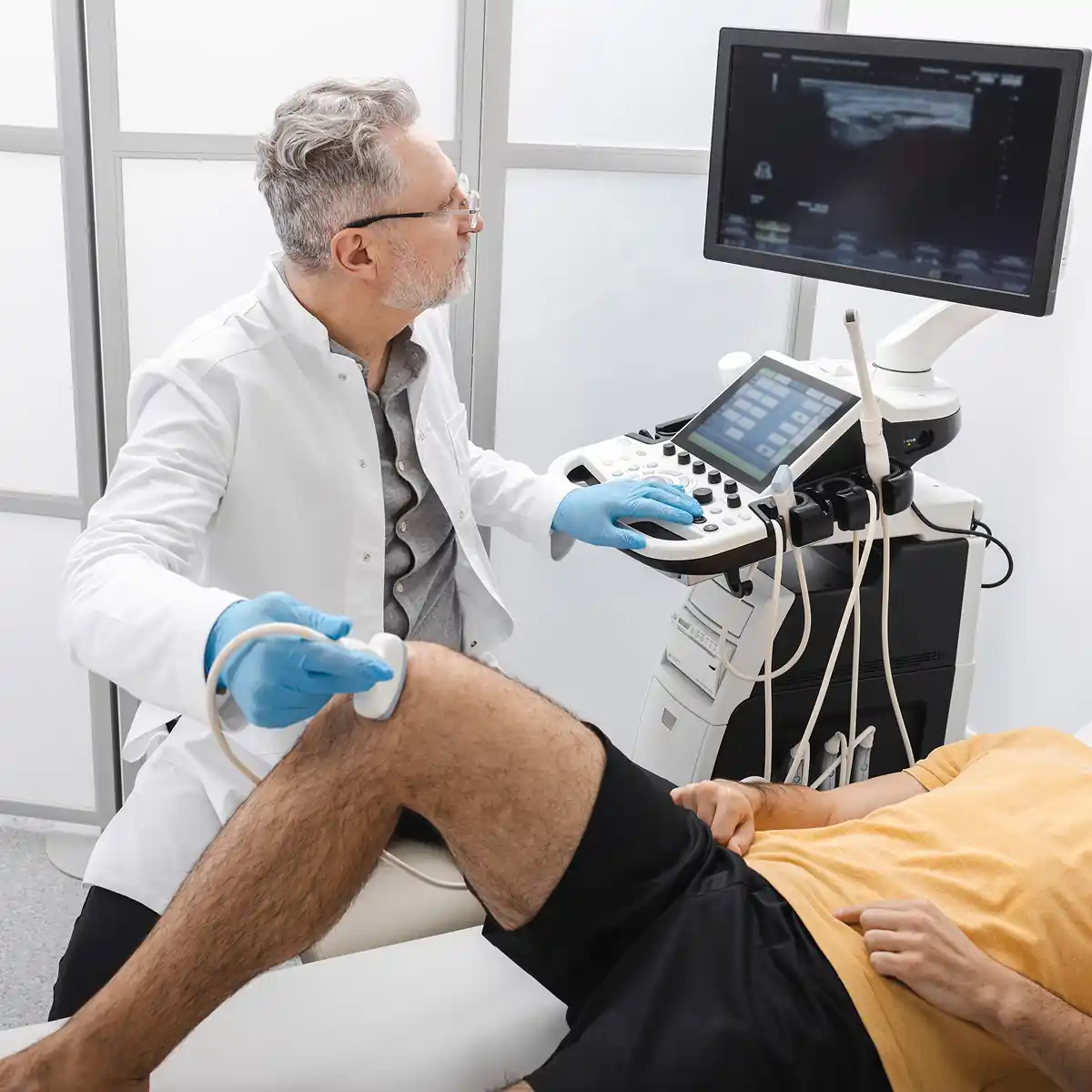
You'll lie comfortably while a technician applies gel to the area being examined and moves a handheld transducer across your skin. The transducer sends sound waves that bounce off your blood vessels and the moving blood inside them, creating real-time images and flow measurements. This vascular ultrasound screening is painless and typically takes 30 to 60 minutes, depending on which area we're evaluating. There's no recovery time, and you can go about your day immediately afterward.
The Types of Vascular Ultrasound We Offer
Because "vascular ultrasound" covers several different exams, here's what each one specifically looks at:
- Carotid ultrasound examines the arteries in your neck that supply blood to your brain, helping assess stroke risk.
- Renal artery ultrasound checks blood flow to your kidneys.
- Abdominal aortic ultrasound screens for aneurysms or narrowing in the body's largest artery.
- Lower extremity venous ultrasound with reflux, sometimes referred to as ultrasound for varicose veins, evaluates the veins in your legs for chronic venous insufficiency and reflux, which often relates to varicose veins.
- Lower extremity arterial ultrasound checks for blocked or narrowed arteries in the legs, a key test for peripheral artery disease.
Dr. Naidu will let you know exactly which type of vascular ultrasound he's recommending and why, based on your symptoms and history.
What Happens After Testing
Once your ultrasound is complete, Dr. Naidu reviews the images and flow measurements to determine next steps. In many cases, results guide us directly toward treatment options like Iliocaval IVUS and Stenting, Peripheral Revascularization, or Spider & Varicose Vein Treatment, depending on what we find.
Preparing for a Lower Extremity Venous Study
If your appointment includes a lower extremity venous ultrasound with reflux, which is the specific exam used to evaluate chronic venous insufficiency, a little preparation goes a long way toward getting accurate results. Plan on about an hour for the test itself, and in the day leading up to it:
- Skip compression socks or stockings for 24 hours before your exam. Compression changes how your veins fill and can mask what we're trying to see.
- Avoid tobacco products for two hours beforehand. Nicotine constricts blood vessels, which can alter the test results.
- Avoid caffeine for two hours beforehand. Like nicotine, caffeine can narrow your veins and make venous insufficiency harder to diagnose accurately.
- Drink plenty of water in the days leading up to your test and on the day of. Well-hydrated veins are easier to image clearly.
- Wear loose, comfortable clothing you can easily move or roll up from the waist down.
If you're coming in for a different type of vascular ultrasound (carotid, renal, abdominal aortic, or lower extremity arterial), there's typically little or no preparation needed, and our team will let you know ahead of time if anything specific applies to your visit.
Frequently Asked Questions
What is a vascular ultrasound, and is the test painful?
A vascular ultrasound test is a painless, non-invasive imaging exam that uses sound waves to check blood flow through your arteries and veins. You'll feel the gel and light pressure from the transducer, but there are no needles, no radiation, and no downtime involved.
How do I know which type of vascular ultrasound I need?
That depends on your symptoms and what Dr. Naidu wants to evaluate. If you're having leg swelling or pain, he'll likely recommend a lower extremity study. If we're screening for stroke risk or an abdominal aneurysm, a carotid or aortic ultrasound may be more appropriate. He'll explain exactly which test he's ordering and why before you come in.
Do I need to prepare for a vascular ultrasound?
Preparation depends on the type of ultrasound. Some exams, like an abdominal aorta study, may require fasting beforehand, while leg vascular studies typically don't. Our team will give you specific instructions when we schedule your appointment.
How do I schedule a vascular ultrasound near me?
We perform all of our vascular ultrasound testing right here in our Florence office, with results reviewed personally by Dr. Naidu. We also offer online scheduling to make booking easy. Request an appointment and we'll find a time that works. We look forward to seeing you.