Seeing the Problem Before We Treat It
Peripheral Angiography in Florence, AL
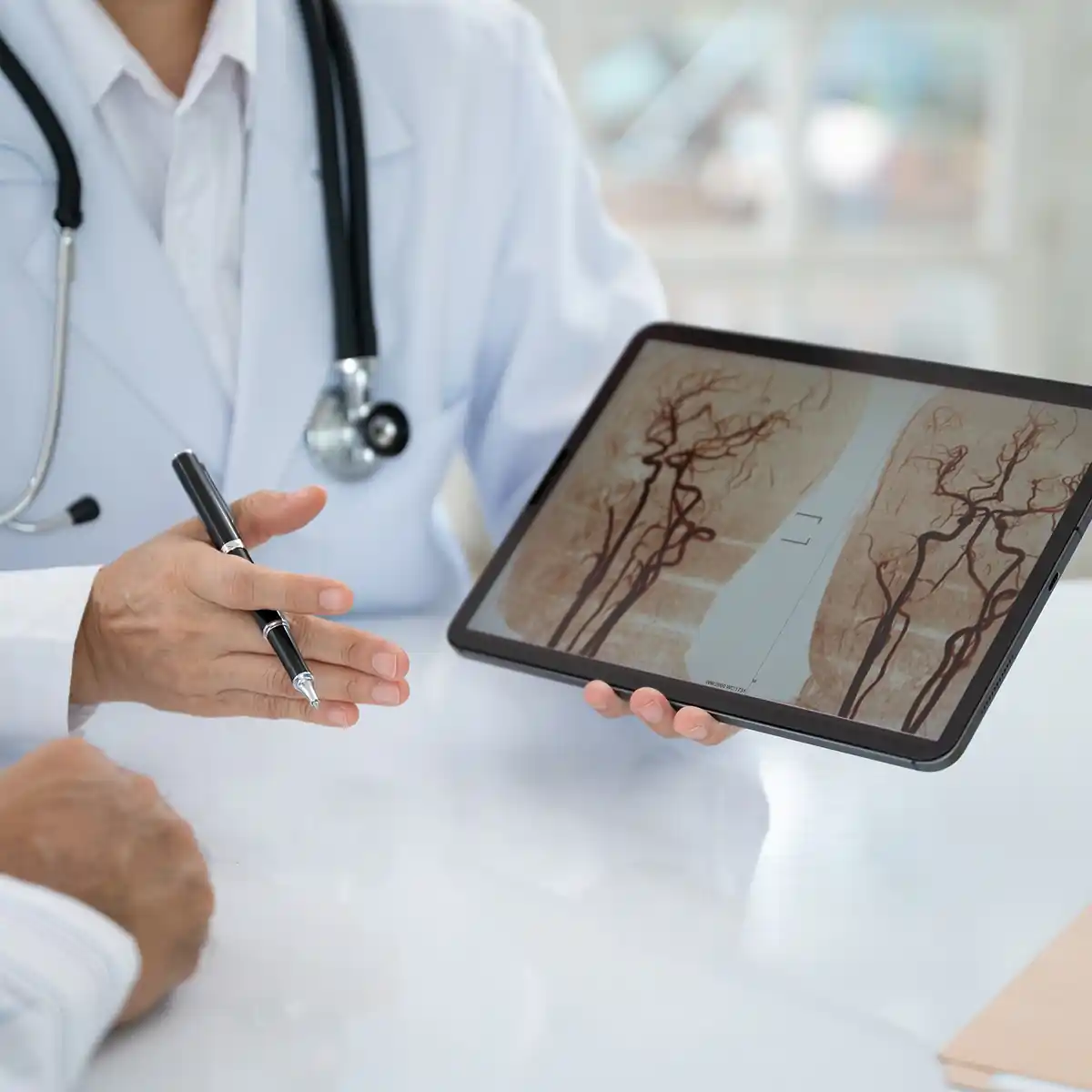
Peripheral angiography, also called peripheral vascular angiography, is an imaging procedure that gives Dr. Naidu a live, detailed map of blood flow through your peripheral arteries. Think of it as an artery blockage test: a thin catheter is guided to the area of concern, a contrast dye is released, and X-ray imaging shows exactly where blood flow is narrowed or blocked. It's less a treatment on its own and more the vision Dr. Naidu needs to plan the right one.
Because of that, peripheral angiography is almost always performed as part of a larger procedure rather than as a stand-alone visit. If testing like a Vascular Ultrasound has already pointed us toward a blockage, angiography is often the next step, done in the same visit as treatments like Peripheral Revascularization or Iliocaval IVUS and Stenting.
If your vascular testing has raised a concern about peripheral blood flow, request an appointment and we'll walk you through what comes next.
What to Expect
The Peripheral Angiography Procedure
The procedure is performed in our in-office cath lab, one of the first in the Shoals area to offer radial artery (wrist) access for peripheral procedures rather than the traditional groin approach. A small catheter is inserted through the wrist or groin and guided to the artery in question using X-ray imaging. Once in place, a contrast dye is released, which shows up clearly on the imaging and reveals exactly where and how severely blood flow is restricted. You'll be awake with light sedation, and recovery is typically quick since it's performed as an outpatient procedure.
Why We Rarely Do This Alone
Because peripheral angiography is a diagnostic and mapping tool, we almost always pair it with treatment in the same session once a blockage is identified, whether that's stenting, revascularization, or, in some cases, leg artery angioplasty performed through our Peripheral Revascularization service. This means less time spent scheduling separate appointments, fewer trips back and forth for you, and often a more predictable peripheral angiography cost picture since imaging and treatment are considered together rather than as two separate visits.
What Happens Next
Once Dr. Naidu has a clear picture of your blood flow, he'll discuss what the imaging shows and what treatment approach makes the most sense for your specific situation, whether that's Peripheral Revascularization, Iliocaval IVUS and Stenting, or a more conservative management plan.
Frequently Asked Questions
What is peripheral angiography, and is the angiography test painful?
Peripheral angiography is an imaging test used to evaluate blood flow, and most patients feel minimal discomfort during it. You'll receive light sedation and local numbing at the catheter insertion site, so you may feel some pressure but not significant pain. Because we favor wrist access when possible, recovery tends to be quicker and more comfortable than with traditional groin-based procedures.
Will I need to stay in the hospital?
No. Peripheral angiography and the procedures that follow it are performed on an outpatient basis in our in-office cath lab. Most patients go home the same day with simple aftercare instructions.
Is this the same as a cardiac catheterization?
No. Our practice focuses exclusively on angiography for peripheral vascular disease, meaning procedures involving the vascular system outside the heart itself. Peripheral angiography is one of several peripheral vascular disease diagnostic test options we use, and we do not perform cardiac catheterization procedures.
How do I schedule a consultation near me?
If prior testing has pointed to a possible blockage, we'll walk you through whether peripheral angiography is the right next step at your consultation. We also offer online scheduling to make booking easy. Request an appointment and we'll find a time that works. We look forward to seeing you.